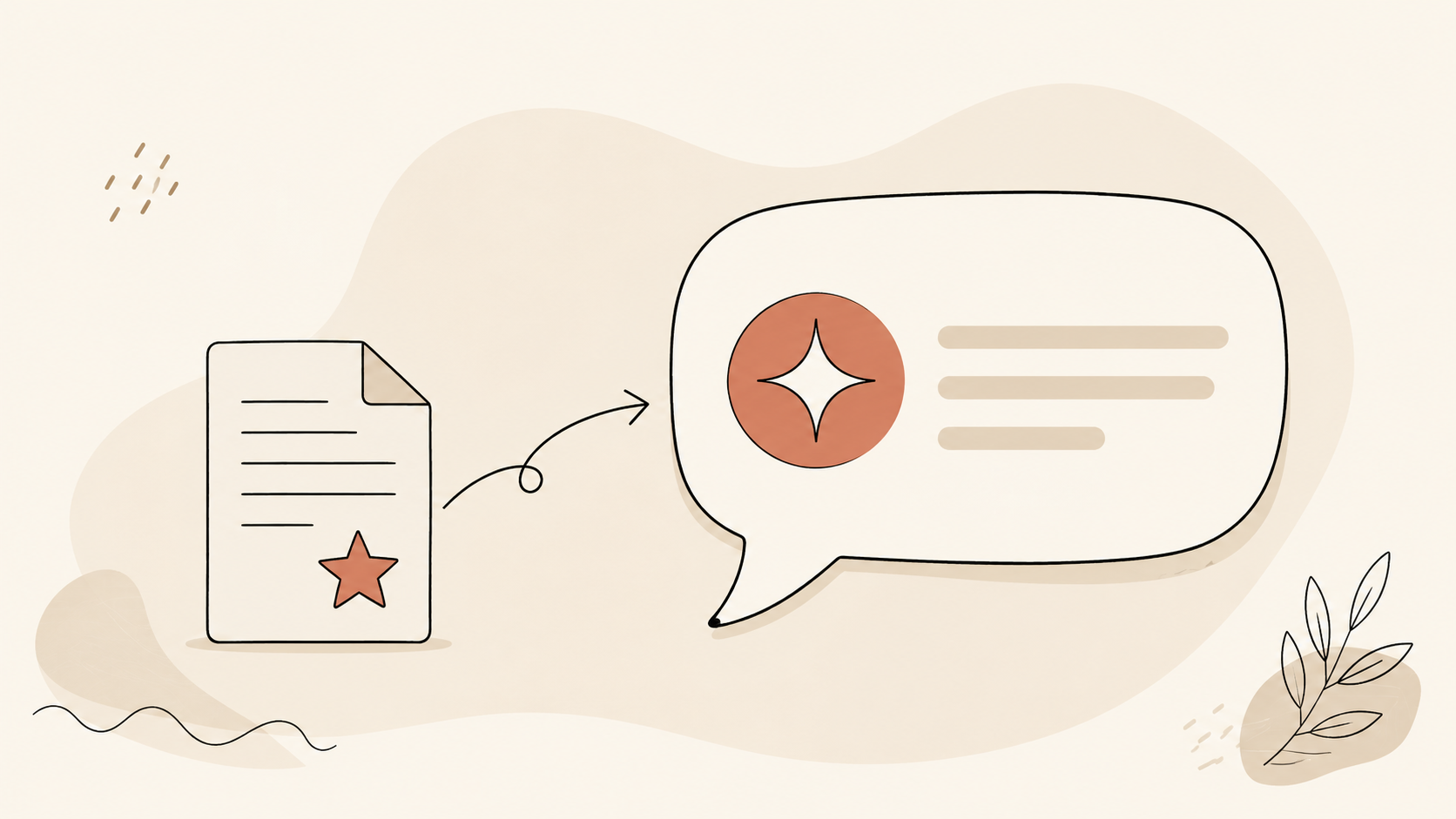
By 2026, "rank in Google" is no longer the only game. AI search engines — ChatGPT, Claude, Perplexity, Google AI Overviews, Gemini, Microsoft Copilot — are collectively answering hundreds of millions of queries every day, and increasingly, those answers are sourced from cited web pages rather than generated from raw model knowledge. Getting your business cited in those answers has become a distinct discipline: Answer Engine Optimization, or AEO. This is the practical playbook we run for clients in 2026 — covering content, schema, technical setup, brand signals, and citation tracking — so your business shows up in the answers AI is generating for your prospects.
What's actually happening when an AI cites you
When someone asks ChatGPT "what's the best home services contractor in Boston," several different things might happen depending on the model, the version, and the user's settings:
- Pure generation from training data — the model writes an answer based on what it "knows" from its training. Citations are usually absent or shallow.
- Web-grounded retrieval — the model triggers a real-time web search, retrieves pages, summarizes them, and cites them. This is the dominant mode in 2026 for any query about specific businesses, current events, prices, or anything time-sensitive.
- Domain-specific grounding — the model pulls from a curated knowledge base (e.g., Bing's index for Copilot, Google's search index for AI Overviews, ChatGPT's web tool, Perplexity's index).
Your goal: get your content into the retrieval set, and get cited when the model summarizes.
The two-layer model
Think of AEO as having two layers:
- Retrieval layer — does the AI's underlying search engine surface your page in response to relevant queries?
- Citation layer — when surfaced, does the AI's summarizer choose to cite your page?
You need both. Pages that aren't retrieved can't be cited. Pages that are retrieved but unconvincing get summarized and dropped.
Retrieval layer: how to get surfaced
The mechanics differ slightly by AI platform but the underlying signals are mostly shared with traditional SEO. The good news: most of what works for Google ranking also works for AI retrieval.
1. Index-quality content
The page needs to be high-signal for the query. That means:
- Clear, specific, and substantive answers to the underlying question
- Strong information density (not fluffy)
- Up-to-date (AI engines weight freshness more aggressively than Google does for some categories)
- Well-structured with clear H1/H2/H3 hierarchy
- Genuinely answers the query, not just contains the keyword
2. Topic authority
AI engines disproportionately favor pages from sites with established topical authority. If you publish one blog post about AI calling agents and nothing else about voice AI, you'll lose retrieval slots to sites with 20 well-organized posts on the topic. This is why content depth matters more in 2026 than it did even two years ago.
3. Crawlability and indexation
The page has to be accessible to AI crawlers. Specifically:
- GPTBot (OpenAI)
- Claude-Web (Anthropic)
- PerplexityBot (Perplexity)
- Google-Extended (Google's AI training/snippet bot)
- BingBot (Microsoft's Copilot also relies on Bing index)
Don't block these in robots.txt unless you have a deliberate reason. Many businesses unintentionally block AI crawlers in their robots.txt or via blanket user-agent blocking. Audit your robots.txt and CDN rules.
For details on each crawler, see OpenAI's GPTBot docs, Anthropic's Claude crawler info, and the Google-Extended documentation.
4. Structured data
Schema markup helps both Google AI Overviews and (to varying degrees) other AI engines identify what a page is about. The most useful schema types for AEO:
OrganizationandLocalBusinessfor brand recognitionFAQPagefor Q&A content (high citation rate in 2026)HowTofor procedural contentArticlewith properauthoranddatePublishedProductfor e-commerceServicefor service-based businesses
See our dedicated schema markup for AI search post for the implementation details.
Citation layer: how to get cited once surfaced
This is where AEO diverges from traditional SEO. Being surfaced in the AI's retrieval set isn't enough — the model has to choose to cite you in the answer. Several factors influence that choice.
1. Direct answers to direct questions
AI summarizers are extractive. They look for pages that contain a direct, quotable answer to the user's question. Pages that bury the answer in 3,000 words of throat-clearing get retrieved but rarely cited.
The fix is a structural pattern we call "answer-first":
- The H2 or H3 is phrased as a question or claim
- The first paragraph below it answers directly, in 2–4 sentences
- Supporting detail follows for users who want depth
- Don't make the AI hunt for the answer
2. Specificity and concreteness
AI summarizers prefer specific, concrete claims with numbers, dates, and named entities. "Most law firms see ROI in 6 months" is weak. "Mid-size personal injury firms typically see ROI on intake chatbots within 4–6 months when missed-call recovery exceeds $5,000/month" is strong.
The more specific your content, the more likely it is to be cited as a useful, authoritative source.
3. Named-entity richness
AI engines build internal "knowledge graphs" from entities and their relationships. Pages that name specific entities — products, people, organizations, locations, technologies — provide richer signals and tend to get cited more.
Don't write "an AI agency in your area." Write "SpeedX Marketing's AI calling agent team in New York." The named-entity-rich version is more useful to the summarizer.
4. Trust signals
Citation patterns suggest AI summarizers weight trust signals:
- Author identity and credentials (real person, real bio, real expertise)
- Domain reputation (referenced by other authoritative sources)
- Citation hygiene (your page citing other authoritative sources)
- Reviews and social proof for local businesses
- Brand mentions in trusted publications
Many of these aren't directly under your control on a one-off basis, but they compound over time.
5. Format that's easy to extract
Lists, tables, comparison grids, and clear definitions get cited more often than dense paragraphs. This isn't because the AI literally pattern-matches on bullets — it's because structured information is more extractable, and the summarizer's job is extraction.
A page with a clean comparison table tends to outperform a page with the same information in paragraph form.
The content strategy that compounds
A practical 2026 content strategy for AEO:
Pillar 1: Question-and-answer content
Map the top 100 questions your customers ask. Write a page that directly answers each one. Use FAQ schema. Cluster related questions on topical hub pages.
This is where dedicated FAQ pages, "what is X" explainers, and Q&A blog posts pay off enormously. Most service businesses can identify their top 100 questions in an afternoon.
Pillar 2: Comparison and decision content
"X vs Y" content is heavily favored by AI summarizers because users frequently ask comparative questions. Build dedicated comparison pages for the choices your prospects face. Use tables. Be honest about trade-offs.
Our AI agency vs. AI platform, free AI tools vs. agency hidden costs, and inbound vs. outbound AI calling agents posts are examples of this pattern.
Pillar 3: Cost and pricing transparency
AI summarizers love specific pricing information because users are constantly asking what things cost. If you can publish realistic cost ranges, you'll show up in pricing-related queries far more often than competitors who refuse to discuss price publicly. See our what AI chatbots actually cost in 2026 and API costs explained — BYO vs. bundled posts.
Pillar 4: Industry-specific deep dives
"AI for [specific industry]" content. Each industry has unique terminology, use cases, regulatory considerations. Industry-specific content captures highly qualified queries from prospects who already know what they need.
Pillar 5: Local and geo-specific content
For local service businesses, location-specific pages still matter — and they matter for AI search too. AI Overviews and ChatGPT both surface local results for location-specific queries. Build proper city/service pages.
Technical AEO checklist
Beyond content, the technical setup matters. Run through this checklist:
- Robots.txt allows GPTBot, Claude-Web, PerplexityBot, Google-Extended, BingBot
- Sitemap is current and submitted to Google Search Console + Bing Webmaster
- Core schema in place: Organization/LocalBusiness, Article, FAQPage where relevant
- Author bios with real credentials on Article schema
- Pages load fast (Core Web Vitals in the green)
- Pages are crawlable (no JS-only rendering of critical content)
- Internal linking surfaces your pillar content
- HTTPS, clean canonical tags, no duplicate content
Brand-signal building
The hardest-to-measure but most-strategic part of AEO is building brand signals across the web. AI engines surface brands they "know about" disproportionately. Brand awareness shows up in:
- Mentions in authoritative publications (industry press, trade media)
- Mentions on Reddit, Quora, and other community sites where users research
- Mentions on review platforms (G2, Capterra for B2B; Yelp, Google for local)
- Mentions in podcasts, YouTube videos, and other media transcripts
- Mentions on Wikipedia (extremely valuable when warranted)
- Backlinks from authoritative sites
These signals don't just show up in citations — they show up in the AI's general "knowledge" about your brand. A brand frequently mentioned in legitimate contexts becomes recommendable. A brand absent from those signals becomes invisible.
Citation tracking: knowing if you're winning
You can't optimize what you can't measure. By 2026, citation tracking tools exist for the major AI engines:
- Brand mention monitoring across ChatGPT, Claude, Perplexity, AI Overviews
- Query-level tracking (which queries cite you, which don't)
- Competitive citation share (your share vs. competitors)
- Source-level tracking (which of your pages get cited most)
Tools in this space evolve fast — see our AI search citation tracking post for a current breakdown.
At minimum, manually spot-check the 10–20 highest-value queries for your business across ChatGPT, Perplexity, Google AI Overviews. Track citation share monthly.
The 90-day execution plan
If you want to actually deploy this, here's a realistic 90-day plan:
Days 1–14: Audit and inventory
- Audit current site for crawlability, schema, and content depth
- Inventory the top 100 questions prospects ask
- Identify the top 20 queries you want to rank/be cited for
Days 15–45: Content sprint
- Publish or refresh the top 20 pages
- Apply answer-first structure
- Add schema markup
- Build out 2–3 comparison/decision pages
Days 46–60: Technical fixes
- Fix robots.txt, sitemap, indexing issues
- Implement remaining schema
- Address Core Web Vitals
- Build internal linking structure
Days 61–90: Authority and tracking
- Outreach for mentions in industry publications
- Engage on Reddit, Quora, niche communities
- Set up citation tracking
- Measure baseline citation share
After 90 days, you should see early citation results. Most clients see meaningful citation lift in months 4–6.
Common AEO mistakes
A few patterns we see repeatedly:
- Blocking AI crawlers without realizing it. Audit your robots.txt and CDN rules.
- Hiding the answer behind sales fluff. AI summarizers move on to the next page if the answer isn't quickly extractable.
- Generic "we are the best" content. AI engines need specifics to extract.
- No schema markup. Free signal you're leaving on the table.
- Trying to game it with AI-generated junk. AI engines detect low-quality auto-generated content and increasingly downweight it.
- Ignoring brand signals entirely. Citation patterns favor brands. Build brand.
What we do at SpeedX Marketing
We run AI SEO (AEO/GEO) engagements for clients across the US, UK, and globally. The engagement covers content strategy, schema implementation, technical setup, brand signal building, and citation tracking. Most engagements run $3,000–$15,000/month depending on scope.
For service overviews, browse our AI SEO services in New York, AI SEO services in Los Angeles, or AI SEO services in San Francisco.
For related posts, see schema markup for AI search, AI search citation tracking, and 2026 state of AI for small business.
Free AI SEO audit
If you'd like a free audit of how your business currently appears (or doesn't) in ChatGPT, Claude, Perplexity, and Google AI Overviews — plus a custom 90-day AEO plan — book a free 30-minute call. Message us on WhatsApp, email info@speedxmarketing.com, or reach out through our contact page.